
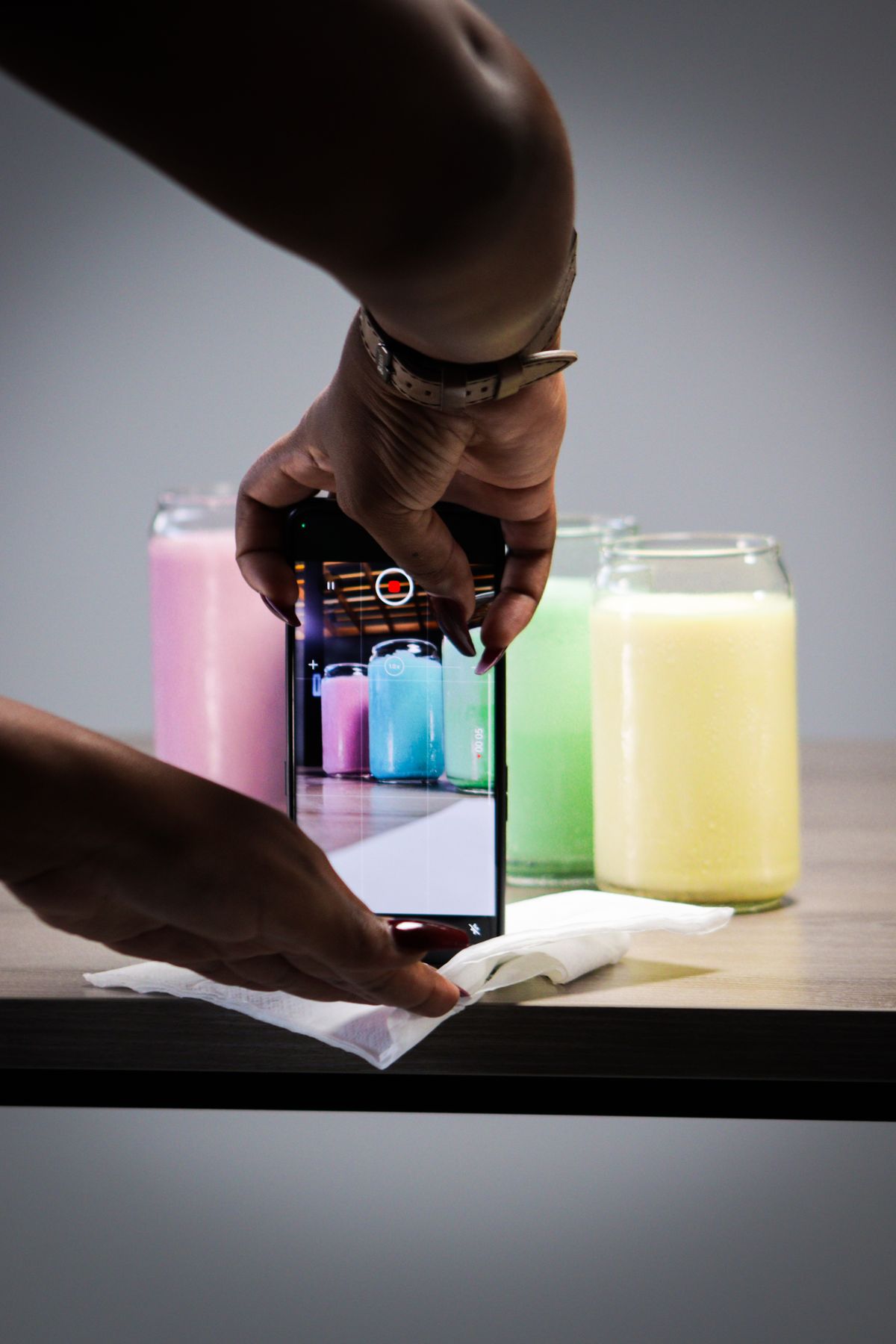
You finally got a good video of your product. Good lighting, decent angle, the item actually looks like it does in real life. You post it to Instagram. It does fine.
Then you remember you're also "supposed to be on" TikTok. And YouTube Shorts. And someone told you Pinterest still drives traffic, whatever that means in 2026. And your Facebook page hasn't posted anything since March.
So now what, do you reshoot the same product five times, once for each app? Rent out your evenings for the rest of the month?
No. And honestly, this is the part most store owners get wrong. They think every platform demands its own video. It doesn't. What changes between platforms is almost never the footage itself. It's the packaging around it.
The Mistake: Treating Repurposing Like Re-Filming
If you've ever opened TikTok, then Instagram, then YouTube in three separate tabs and tried to "make content" for each one individually, you already know why this burns people out. It's not that the work is hard. It's that you're doing the same job three times because it feels like each platform needs its own version of you.
Here's a more useful way to think about it: you're not making five videos. You're making one video and five deliveries of it. The raw clip, someone unboxing it, a close-up of the texture, a 360 spin, whatever you've got, is reusable. What needs to adapt per platform is the frame, the pacing at the front, the caption, and sometimes the audio.
That's it. That's genuinely most of the work.
What Actually Needs to Change Per Platform
Aspect ratio. Instagram Reels, TikTok, and YouTube Shorts all want vertical 9:16. Facebook feed and Pinterest lean more flexible, but square or vertical still outperforms landscape almost everywhere on mobile. If your original footage is vertical, you're already covered for most platforms. You're just cropping or reframing for the couple that aren't.
The first two seconds. This is the one that trips people up because it's invisible unless you're looking for it. TikTok and Reels are unforgiving about the hook. If nothing interesting happens in the first second or two, the algorithm (and the viewer's thumb) moves on. YouTube Shorts is slightly more patient. Facebook and Pinterest, where people are scrolling with a bit less urgency, give you a touch more room to breathe. Same video, but you might trim or reorder the opening frames depending on where it's going.
Caption length and tone. TikTok captions are short and casual, sometimes just a hook line or a question. Instagram can carry a bit more, a short story, a call to action, a couple of relevant hashtags. YouTube Shorts titles function almost like search terms, since Shorts get pulled into YouTube search results more than people expect. Pinterest is its own animal entirely. The description is doing real SEO work there, more like a mini product listing than a caption (that one deserves its own post, honestly).
Sound. TikTok and Reels lean on trending audio or music. YouTube Shorts and Facebook do fine with the original product audio, or none at all if you're relying on on-screen text. This is usually the fastest swap of the bunch: same visual, different soundtrack.
"Notice what's not on this list: the actual footage, the product, the lighting, the story you're telling. That stays constant. You're adjusting the wrapper, not remaking the gift."
What This Looks Like in Practice
Say you've got one 15-second clip of a candle being lit, the flame catching, a slow pan across the label.
- Instagram Reel: vertical crop, trending or ambient audio, caption with a short line about the scent and a "shop the link in bio."
- TikTok: same crop, punchier hook text overlaid in the first second ("this is why it sold out twice"), trending sound instead of ambient.
- YouTube Short: same vertical crop, but the title is doing more work, something like "cozy fall candle restock," because people actually search Shorts.
- Facebook: can go slightly longer if you have extra footage, paired with a caption that reads more like a mini product description, since Facebook audiences respond less to speed and more to context.
- Pinterest: a still frame or short loop, paired with a keyword-rich description, because Pinterest functions more like visual search than a social feed. People are looking for "fall candle aesthetic" the way they'd Google it.
Same 15 seconds of footage. Five very different-feeling posts. Maybe twenty minutes of extra work, not five separate shoots.
Why Store Owners Skip This (And Why It Costs Them)
Usually it's not laziness. It's that reformatting five different ways, five different times a week, is its own kind of tedious. It's not creatively hard, it's just repetitive in a way that eats an evening. So people default to posting on the one platform where they already have a habit, usually Instagram, and quietly let the others go stale.
The cost isn't dramatic, it's just compounding. Every platform you're not posting to is an audience you're not building, using content you already made. The video's already paid for, so to speak. The only thing left on the table is distribution.
Where Automation Actually Helps Here
This is exactly the kind of repetitive-but-not-hard work that's worth handing off. Instead of manually cropping, recaptioning, and re-uploading the same clip five times, VidyBack takes one product video and reformats it for Instagram, TikTok, YouTube, Facebook, and Pinterest automatically, matching the aspect ratio and posting cadence each platform actually wants, without you re-editing from scratch every time.
You still make the video once. You just stop paying for it five times over in your evenings.
If you've got a backlog of product clips sitting in your camera roll that only ever made it to one platform, that's five platforms' worth of content you're already sitting on. It just hasn't been unpacked yet.
Turn One Video Into Five Platforms' Worth of Posts
VidyBack reformats your product videos for Instagram, TikTok, YouTube, Facebook and Pinterest automatically. Film once, post everywhere.
Try VidyBack FreeWritten by VidyBack Team
Sharing what actually works for ecommerce social media automation.